
Clark County VINELink Coverage
The sheriff's official site links directly to Kentucky VINELink site 18000. That link is the county-facing door. Kentucky's Attorney General describes VINE plainly. It is a victim-information and notification system spanning county jails, prisons, mental-health facilities, and juvenile detention centers. Use it after a Clark County arrest. No county page promises instant booking updates. Treat it as the official custody-notification path, not a real-time feed. The Clark County Detention Center roster stays the direct view of who is in local custody. KOOL serves a different population. Kentucky Offender Online Lookup covers people in state custody or supervision, not every fresh county booking. A match reflects the last data supplied. People also move between local, state, and federal systems. Such moves can leave gaps between records.
Run a Clark County Custody Check
Search for one specific person. Compare every detail the interface shows. Screens and prompts change over time, so work from a legal name or identifier already on an official record rather than a fixed form description.
- Open VINELink through the sheriff-linked Kentucky site context.
- Select the relevant Kentucky custody search when the interface asks for a location.
- Enter the person's name or the identifier requested by the live form.
- Review multiple matches carefully. Compare name, age or birth information, facility, and ID when shown.
- Open the matching record and read the status as a custody report, not a court result.
- Use the registration option only after confirming the correct person.
Common names can return several results. Never guess from a photo or partial name. If the person is missing, recheck spelling, allow for processing lag, and call CCDC at 859-745-0270. The Clark County recent-arrests hub maps where booking and court records live.
Clark County VINELink Result Fields
VINE interfaces differ by system and change over time. Kentucky sources support a practical result map. Any field can be absent in a given case, and a blank should never be filled from an unofficial source.
| Result element | What it tells you |
|---|---|
| Name | The identity attached to the custody record; compare other details. |
| Custody status | The reported state of custody at the last data update. |
| Facility | The participating institution associated with the record. |
| Identifier | A system or offender number that can separate similar names. |
| Status event | A release, transfer, or other change reported to VINE. |
| Registration option | The route for choosing notices tied to the correct match. |
VINELink is not a mugshot search. No public booking photo is promised. For a lawful records purpose, the sheriff routes an adult custody-photo request through investigative-supervisor review. Uncharged requests may be denied, and juvenile identity stays protected.
Register Clark County Custody Alerts
The Kentucky Attorney General's VINE page describes free, anonymous registration. Phone sign-up takes two numbers and a four-digit PIN. Release calls matter most. Automated calls repeat every 30 minutes for 24 hours, or until the PIN is entered to acknowledge.
- Confirm that the selected VINELink result belongs to the intended person.
- Choose the custody event or notification options offered by the current interface.
- Enter a phone number, text number, email address, in-app destination, or TTY channel as available.
- Create and save the four-digit PIN when registering for calls.
- Complete the verification steps and keep the registration details in a safe place.
- When a call arrives, enter the PIN to acknowledge it. Recheck the live record and contact the facility if needed.
A Kentucky DOC brochure adds text, in-app, email, and TTY notices to the phone option. Register by phone at 1-800-511-1670. TTY access is 1-866-847-1298. Protective-order registration uses a case number and is a distinct process from tracking a jail custody record.
Every channel has a tradeoff. Calls reach a phone without a data plan, but the PIN is what stops the repeated release notices. Text and email keep a written timestamp. Delivery still depends on the carrier or provider, though. In-app alerts need the app installed and notifications left on. Registering more than one permitted channel spreads the risk. No channel replaces direct verification of an in-custody fact. The two-number option helps when one line is down. Both recipients should know what the PIN does and keep it private. Anonymous registration shields identity in the notification process. It cannot hide calls or messages from anyone holding the device, so review each contact method before enrolling.
Why Clark County Uses VINE
Clark County publishes no public 24-hour booking feed. That gap is where VINE earns its place. The sheriff's direct site-18000 link, paired with Kentucky's statewide registration rules, builds a purpose-built notice route for releases and transfers. An alert can fire even when a roster row changes. It helps someone prepare for a release or custody move. Registration is not safety planning. Kentucky's own materials say not to rely on VINE alone. Keep contact details current and guard the PIN. For an immediate threat, use emergency services.
- Custody status
- The reported location or confinement state, which can change.
- Transfer
- A move from one facility or custody system to another.
- Release
- Exit from the reported custody setting, not dismissal of the charge.
- Disposition
- The court's final or later action on the case, found through court records.
Clark County VINELink Limits
VINE has blind spots. Federal Bureau of Prisons custody and ICE detention sit outside it. Each runs its own locator. When someone moves from CCDC into a federal agency, the person can drop out of the expected Kentucky view. The gap can last until the other system catches up. Clark County also lists no local immigration detention feed of its own.
VINE makes no promises about speed either. It does not guarantee same-day posting. Nor does it promise an alert ahead of every change, or display after release. A misspelled name or a partial booking can skew a search. So can a system outage or a transfer. For someone still in custody, the Clark County jail roster often gives more direct detail. CourtNet and the clerk track case events. Each tool answers a different question, so none can stand in for another.
A booking may be only hours old. For those, start with the live roster and a direct call to the jail through the Clark County arrests-last-24-hours process. If no alert ever arrives, trust those official channels over an assumption that custody never changed.
A no-match result can mean several things. The booking may not have reached VINE yet. The name may appear in a different form, or the person may already be released. The holding system may not join the selected search. The arrest may not have led to detention at CCDC at all. Call the known facility instead of treating one empty search as a fact.
Federal custody needs the Bureau of Prisons locator. Immigration detention needs the ICE Online Detainee Locator. Those systems answer different questions and may rely on different identifiers. A county arrest alone never proves a federal hold exists. Clark County posts no ICE contract or local immigration booking feed. Confirm any transition between systems directly rather than guessing.
Kentucky VINE Access Screens
The official VINELink Kentucky site is where the sheriff's own link sends you to search and register.
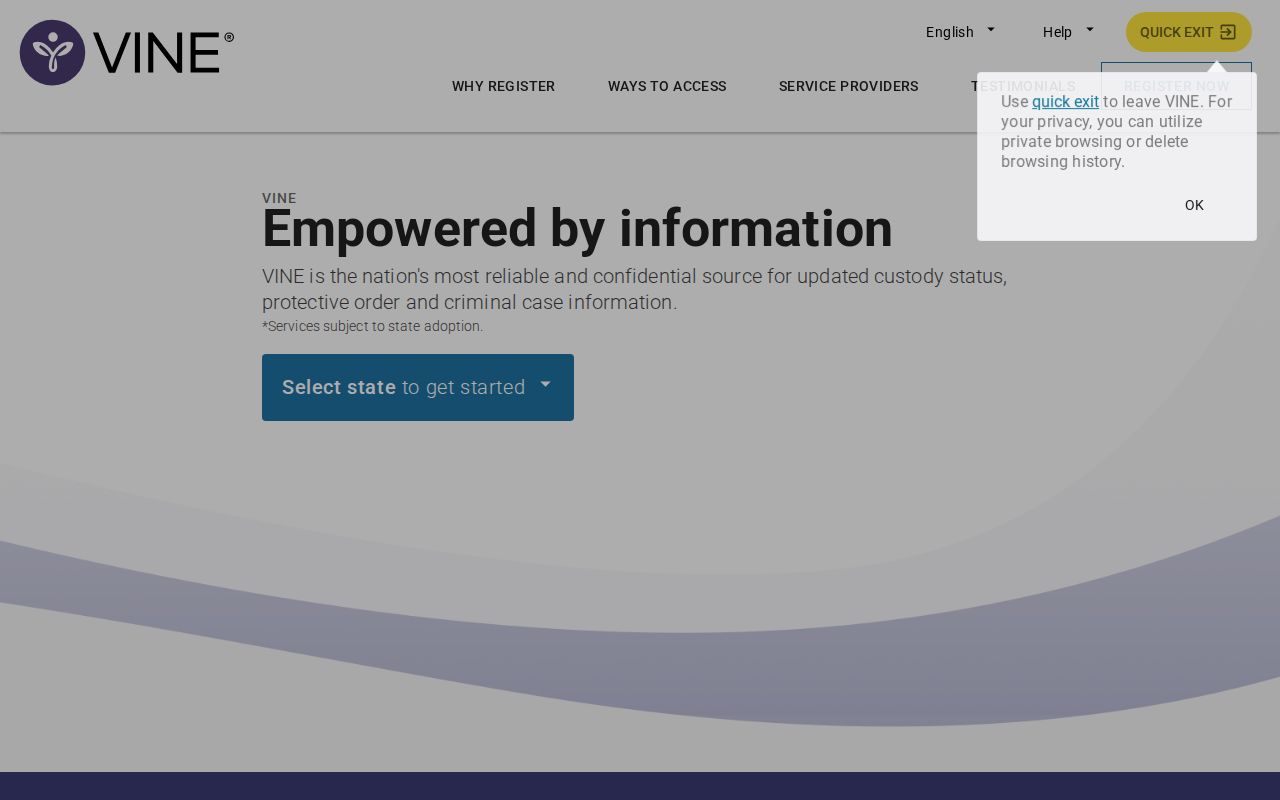
Think of the screen as a tool for one person's custody status, not a gallery of people arrested in Clark County. The Kentucky Attorney General VINE resource lays out statewide access and how notification works.
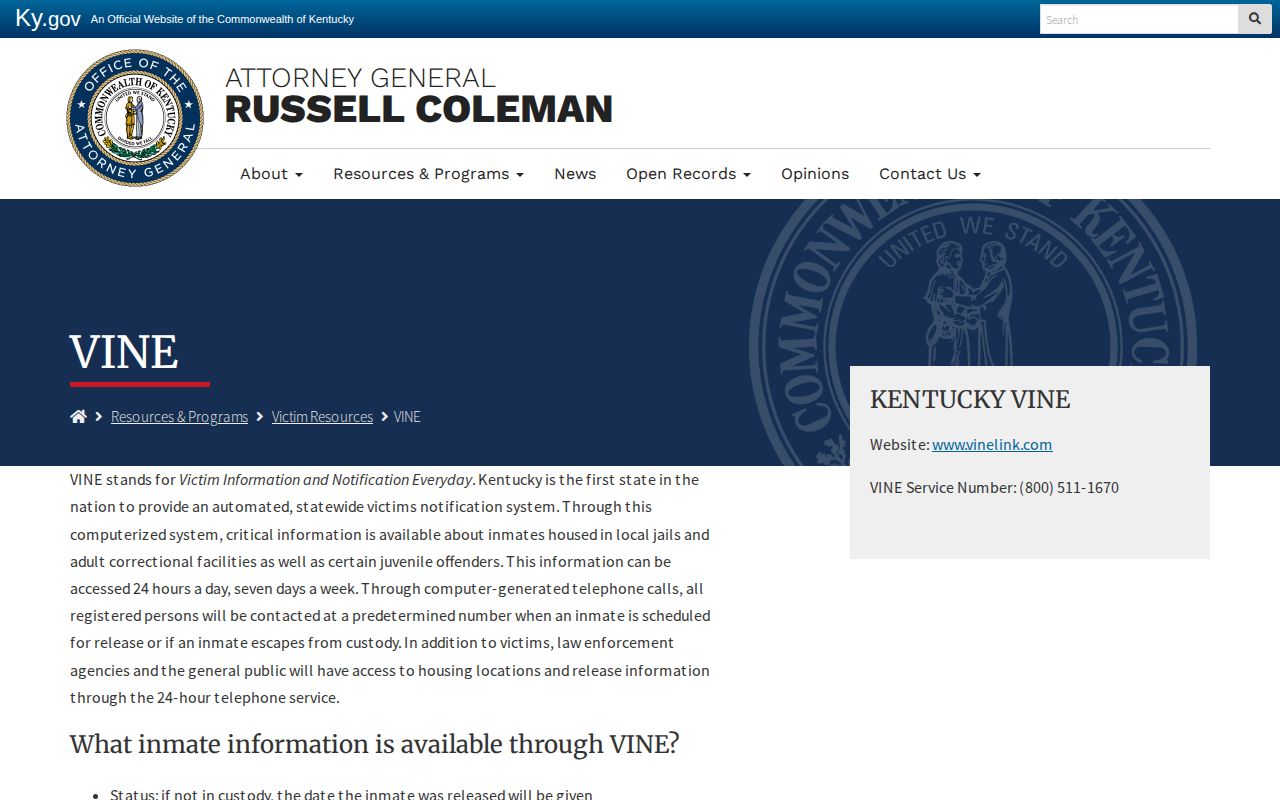
That state page also covers the phone, PIN, and repeated-release-call details you need when setting up alerts.
Interpret Clark County Custody Changes
A release alert means the person left the custody setting VINE reported. A transfer notice means the holding location changed. The result may not name the facility. It may not say whether the new setting is county, state, or federal. Each alert is a prompt, not a conclusion. An arrest and booking only open a case. Charges can be amended, reduced, dismissed, or tried. Kentucky CourtNet and the Clark County clerk hold the disposition. Check them for the current status.
Note: Save the date and time of each alert, then confirm the named facility before acting on a custody change.
When a result names CCDC, compare it against the official roster. If the two sources disagree, call the facility. Later, if the person enters Kentucky state custody or supervision, KOOL becomes the state corrections lookup. KOOL runs on its own schedule. It also warns that fresh data may not be final. So treat it as a state tool, not a source for a new county booking.
Keep the custody trail and the case trail separate in your notes. Put VINE's reported status and time in one place. Put the court case number, hearing dates, and disposition from official court sources in another. That separation keeps a release or transfer alert from being mistaken for a case outcome.